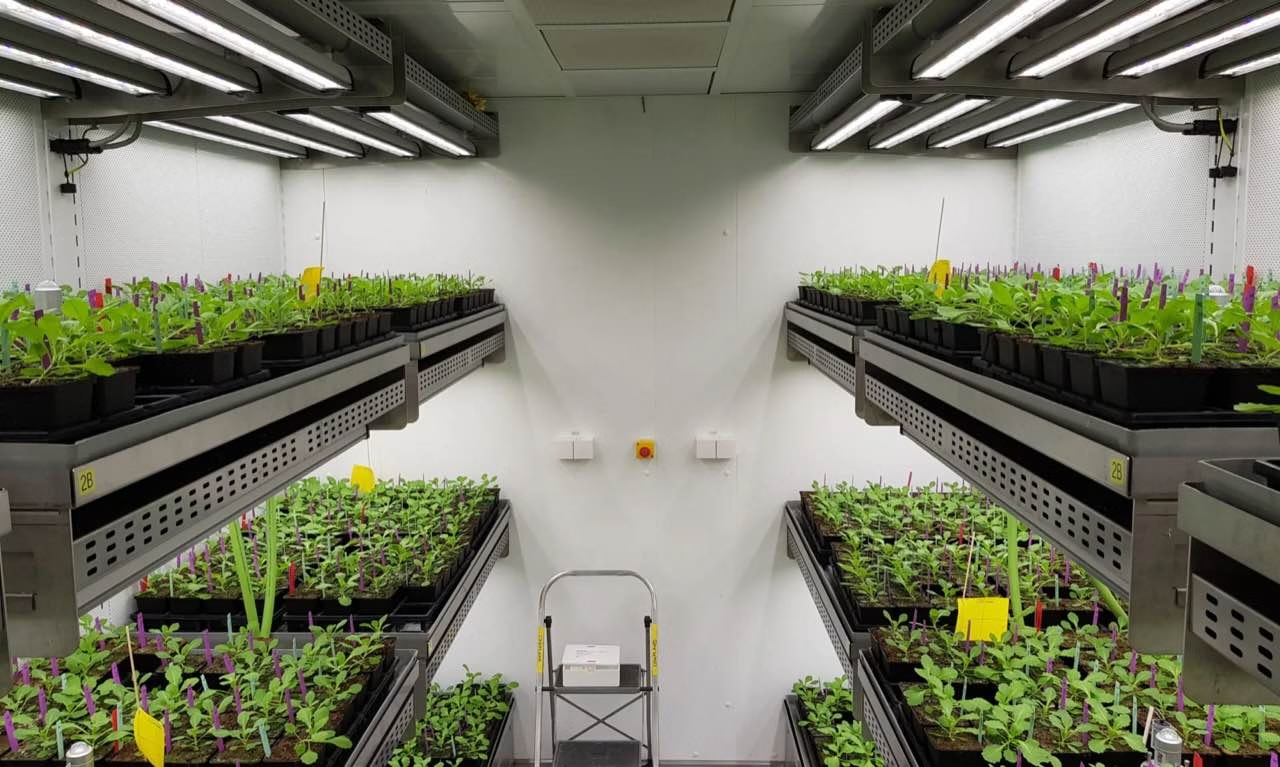

A controlled environment is most useful when its settings support a clear biological question. Plan the growing space, lighting, climate cycles and measurement access around the material you will study, rather than starting with cabinet volume alone.
Bronson Climate supplies plant growth cabinets, custom climate rooms and research lighting integration. As a Valoya system integrator, we consider the lighting arrangement alongside the complete research installation. Suitability and operating combinations are confirmed for the selected configuration.
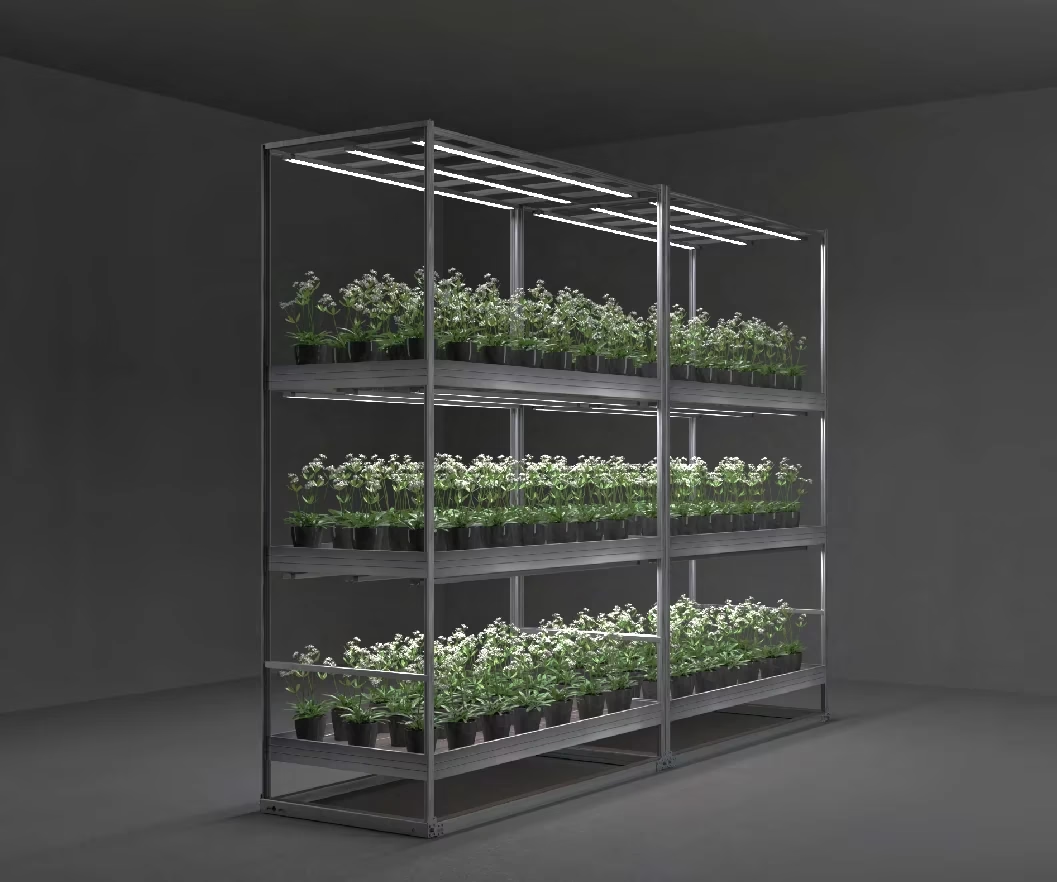
Make lighting a defined experimental treatment
Light affects photosynthesis as well as morphology, flowering and other developmental responses. Spectrum, intensity and photoperiod should therefore appear in the experimental brief, alongside temperature, humidity and other relevant conditions.
Define the growing plane, measurement method and positions across the usable area. Plants at different positions or canopy heights may receive different treatments even when the controller displays one setting. Record the actual arrangement and agree how it will be checked. Our research lighting specification guide explains spectrum, PPFD, DLI, uniformity and UV planning.
Plant growth and environmental studies
For experiments on growth or environmental response, state species and cultivar, starting and final plant size, container dimensions and replication. Describe day/night cycles and which treatment groups require separate compartments or rooms. Include the expected plant load when discussing climate performance.
Compare the Incrementum cabinet range for reach-in arrangements, or discuss walk-in rooms when bench layout, plant height or scale calls for a different solution. Published temperature, humidity and light ranges are not a promise that all extremes are available simultaneously.
Tissue culture, micropropagation and germination
For vessels, plates or trays, define usable shelf area, clear height and access for routine work. Consider shading and transmission through lids or vessel walls when deciding where light should be measured. Ask how uniformity will be assessed over the positions actually occupied by the material.
Valoya’s Crop Science guide discusses low-to-mid-intensity lighting for several in-vitro and acclimatisation applications. Treat these as application examples rather than a universal prescription. The appropriate light level, spectrum and schedule depend on the species, material and protocol.
Flowering, seed production and speed breeding
Specify whether the goal is shorter generation time, flowering synchronisation, seed multiplication or observation of a more field-like developmental response. These goals can favour different lighting strategies; a treatment that accelerates flowering is not automatically the best choice for seed yield.
The supplied Valoya guide presents spectrum-dependent life-cycle examples and speed-breeding applications. Outcomes depend on crop, cultivar, intensity, photoperiod and the rest of the method. Confirm the target outcome experimentally before making programme-wide throughput assumptions.
Daylight-oriented studies and crop protection research
When outdoor relevance matters, describe which features of daylight the experiment needs: spectral balance, intensity, UV, far-red or dawn/dusk transitions. A daylight-labelled source alone does not reproduce natural sunlight or every outdoor variable.
For pest, disease or bioassay work, include requirements for containment, observation, cleaning and environmental separation. If UV is part of the treatment, specify the wavelength, measured irradiance and timing separately from conventional PPFD, and include an appropriate safety assessment. See the UV planning section of our lighting guide.
Phenotyping and plant health measurements
Pro Eden combines a Bronson Climate cabinet with PhenoVation’s PlantExplorer imaging system. Consider plant layout, camera position, measurement access and any imaging sequence together. Agree which light conditions are required during growth and during measurement, so imaging does not introduce an uncontrolled treatment change.
Keep retrofit and long-term studies comparable
If existing lamps are replaced with LEDs, document the original spectrum, distribution, timing and environmental conditions first. Assess the new lighting and the resulting climate balance, then agree any comparison trial needed for ongoing studies. Keep the configuration and replacement history with the experimental record.
Prepare a comparable enquiry
- Describe the species, cultivar, growth stage and research question.
- Provide tray or pot dimensions, usable growing area, clear height and replicate layout.
- State climate cycles, spectrum, PPFD, photoperiod and any UV or far-red requirements.
- Identify irrigation, CO₂, imaging, alarms and recording needs where relevant.
- Include site access, utilities and the measurements required at acceptance.
Discuss your research environment with Bronson Climate, browse our planning guides or view installation examples.
Sources and scope
Lighting application examples are informed by Valoya’s June 2026 Crop Science and UV Lighting solution guides. See Valoya’s Crop Science guide and UV-Series resources. These examples do not establish performance guarantees for a particular Bronson configuration or experiment.